Karioska Journal

Stories of craft, culture and considered interiors.

Explore African craftsmanship, living heritage and thoughtful ways to bring meaningful objects into contemporary spaces.

Specifying Authentic African Pieces on Deadline: A Guide for Interior Designers

Featured story

Specifying Authentic African Pieces on Deadline: A Guide for Interior Designers

A trade-ready guide to help interior designers specify authentic African artisan pieces under real project deadlines. Learn what to confirm up front, how to manage finish variability, when to use approved alternates, and how to prepare pack lists, install notes and care sheets. Includes a concise brief template for fast sourcing with Karioska.

Read article
Provenance and Authenticity in African Decorative Arts: A Collector’s Checklist

Provenance and Authenticity in African Decorative Arts: A Collector’s Checklist

A plain-language guide to help collectors and design professionals verify provenance, materials, age, documentation and ethics before acquiring African decorative pieces.

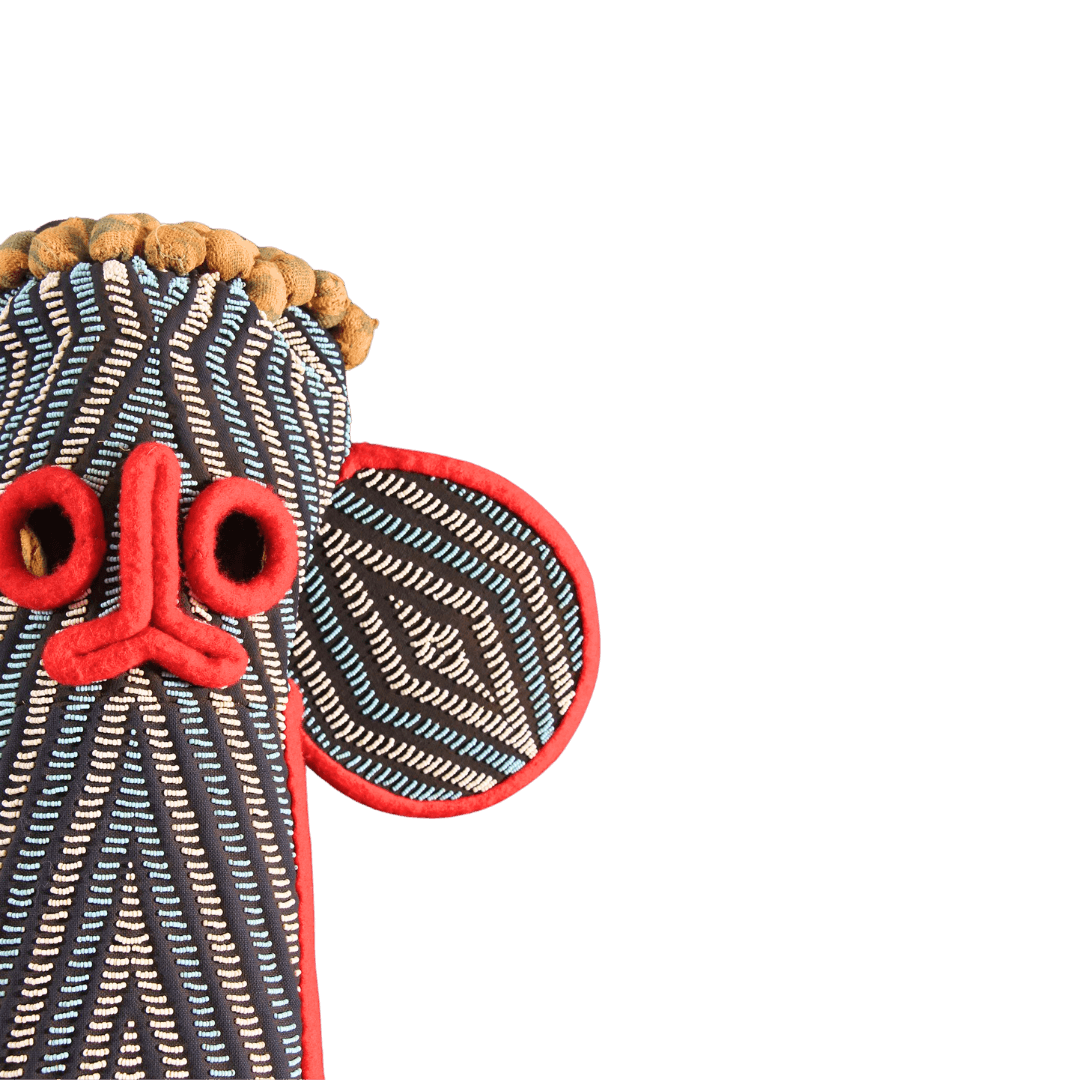
Intricately crafted power of Juju objects symbolizing West African spirituality and cultur

The power of Juju, mysteries and magic of Africa

Africa, a land of ancestral traditions, is steeped in beliefs deeply rooted in spirituality and mysticism. Among these traditions stands Juju, a mysterious and mystical force, both protective and feared, whose stories have been passed down through generations. Often associated with rituals and sacred objects, Juju carries an almost mythical power that has shaped the lives and cultures of African people. Let us delve into this fascinating universe to uncover the power of Juju and its influence in African cultures. The mysterious origins of Juju The term “Juju” is often used broadly to refer to objects, amulets, or spiritual practices specific to West Africa. While its precise origins remain shrouded in mystery, Juju finds its roots in traditional animist beliefs, where the spirit, invisible forces, and nature are intricately interconnected. For its followers, Juju is not merely a concept but a tangible manifestation of spiritual life. It is used to invoke protection, ward off evil, heal, or bring luck and prosperity. Juju can take many forms: sculptures, masks, talismans made from natural materials like wood, beads, cowrie shells, or even feathers. Each object carries intention and specific magic, often crafted by an initiated healer, sorcerer, or priest. Juju rituals: protection and power Juju is deeply entrenched in rituals and magic. Used for both good and ill, Juju objects are commonly found in protective ceremonies for individuals, families, or even entire villages. Protective amulets, often created during specific ceremonies, are worn or placed in spaces to ward off malevolent spirits and negative influences. But Juju is not limited to protection. In darker practices, it can be used as a tool for control or curses. The power of Juju always depends on the intention of its user. In Africa, some rituals are still practiced to influence luck, health, or resolve conflicts. Juju in everyday life In everyday life, many families and communities deeply believe in the power of Juju. Traditional healers, who inherit ancestral knowledge, play a central role in crafting and using these spiritual objects. Juju is also integrated into more mundane aspects of life: farmers place it in their fields to ensure good harvests, and merchants use it to attract prosperity to their businesses. Juju and symbolism: objects of magic and art One fascinating aspect of Juju is its duality as both spirituality and art. The objects associated with Juju are often beautifully crafted, using natural materials to create intricate and complex designs. For instance, Juju hats, traditional feathered headdresses used in Bamileke ceremonies in Cameroon, have become highly sought-after decor items worldwide. Each feather and bead symbolizes both spiritual power and social status. These objects represent African art in its deepest form, where art is inherently tied to spirituality. They are works that are both symbolic and magical, showcasing the cultural and spiritual richness of African societies. Juju in the modern world With the rise of the modern world, Juju has managed to evolve and adapt. While some ancestral practices persist in remote villages, the influence of Juju today extends far beyond the borders of Africa. Many Juju objects, such as talismans, amulets, and sculptures, have found a place in contemporary African art, where they are reinterpreted by modern artists while preserving their spiritual essence. Additionally, Juju has garnered renewed interest in global popular culture, appearing in literature, films, and artistic works, captivating audiences worldwide. Whether through art exhibitions, religious ceremonies, or pop culture, Juju continues to fascinate and inspire. Juju, mystery, and heritage The power of Juju remains enigmatic and captivating. At the crossroads of the visible and invisible worlds, it symbolizes both protective strength and transformative capacity. Juju is not just an object or a practice – it is a gateway to the mysteries of the unseen, connecting humanity to nature and the spiritual forces that surround it. In Africa and beyond, Juju remains a powerful symbol of the link between past, present, and future, between tradition and modernity. Let yourself be enchanted by this mystical world, where art and magic merge, and where every object carries an ancient story full of mystery and unparalleled power.

Design Principles to Blend African Heritage With Contemporary Interiors

Design Principles to Blend African Heritage With Contemporary Interiors

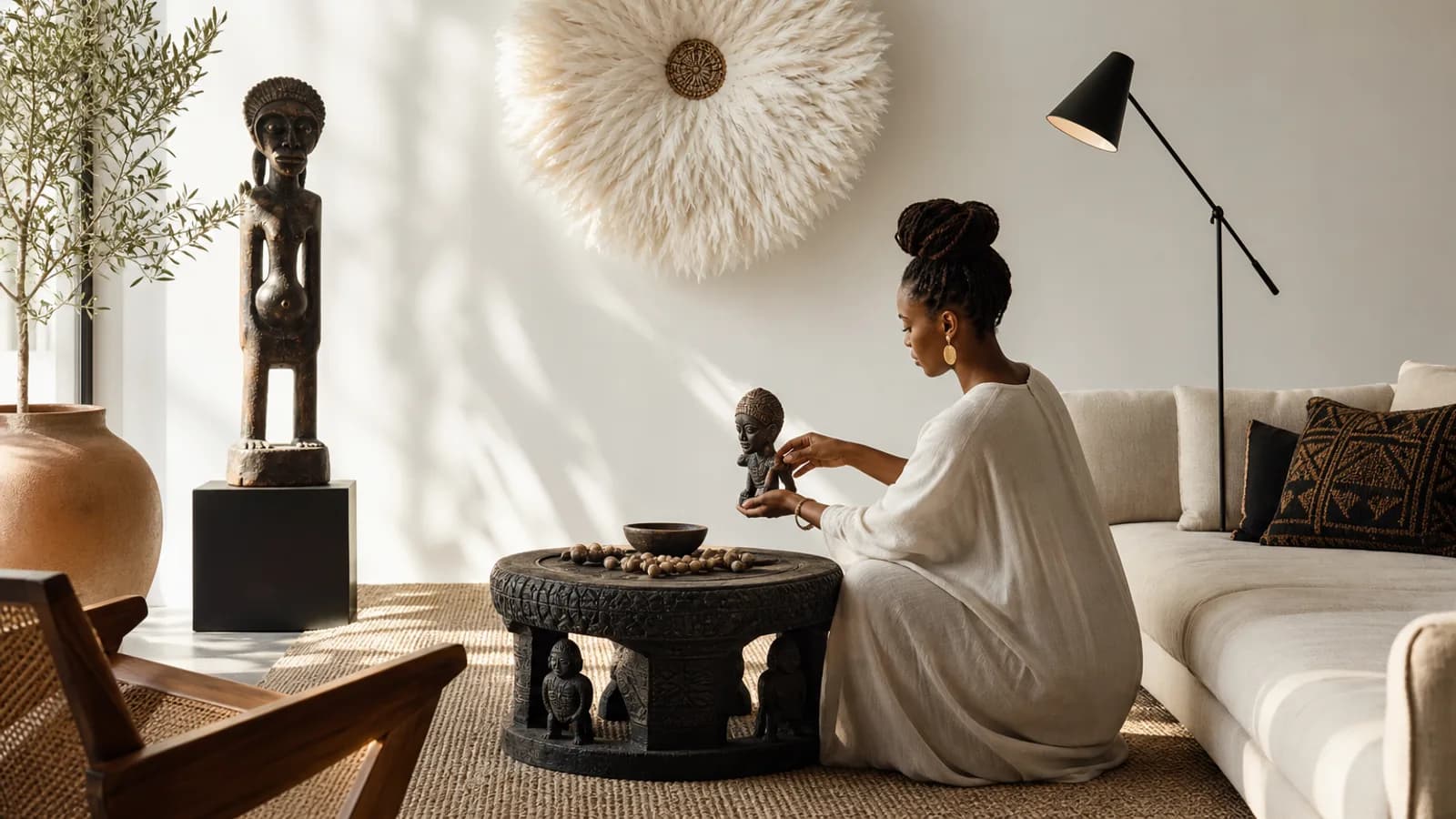
Practical design rules to integrate authentic African artisan pieces into minimalist and modern spaces while preserving balance, scale, negative space and texture. Includes color guidance and room-by-room examples for homes and hospitality projects.

Planning a Cohesive African-Inspired Decor Program for Hotels and Restaurants

Planning a Cohesive African-Inspired Decor Program for Hotels and Restaurants

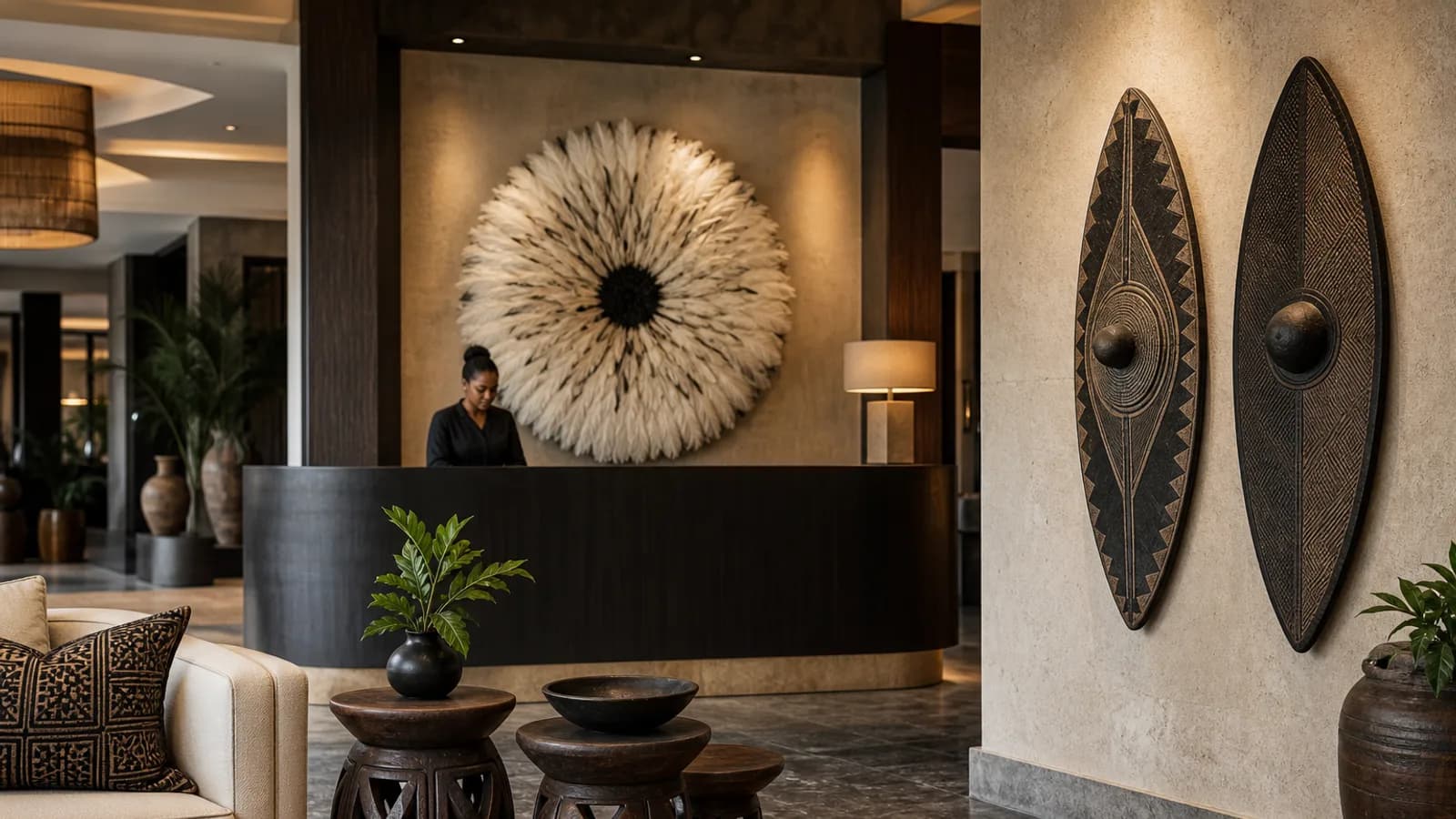
A practical guide for hospitality teams to plan a consistent, authentic African-inspired decor program across multiple spaces, with clarity on story, zoning, durability, safety and sourcing.

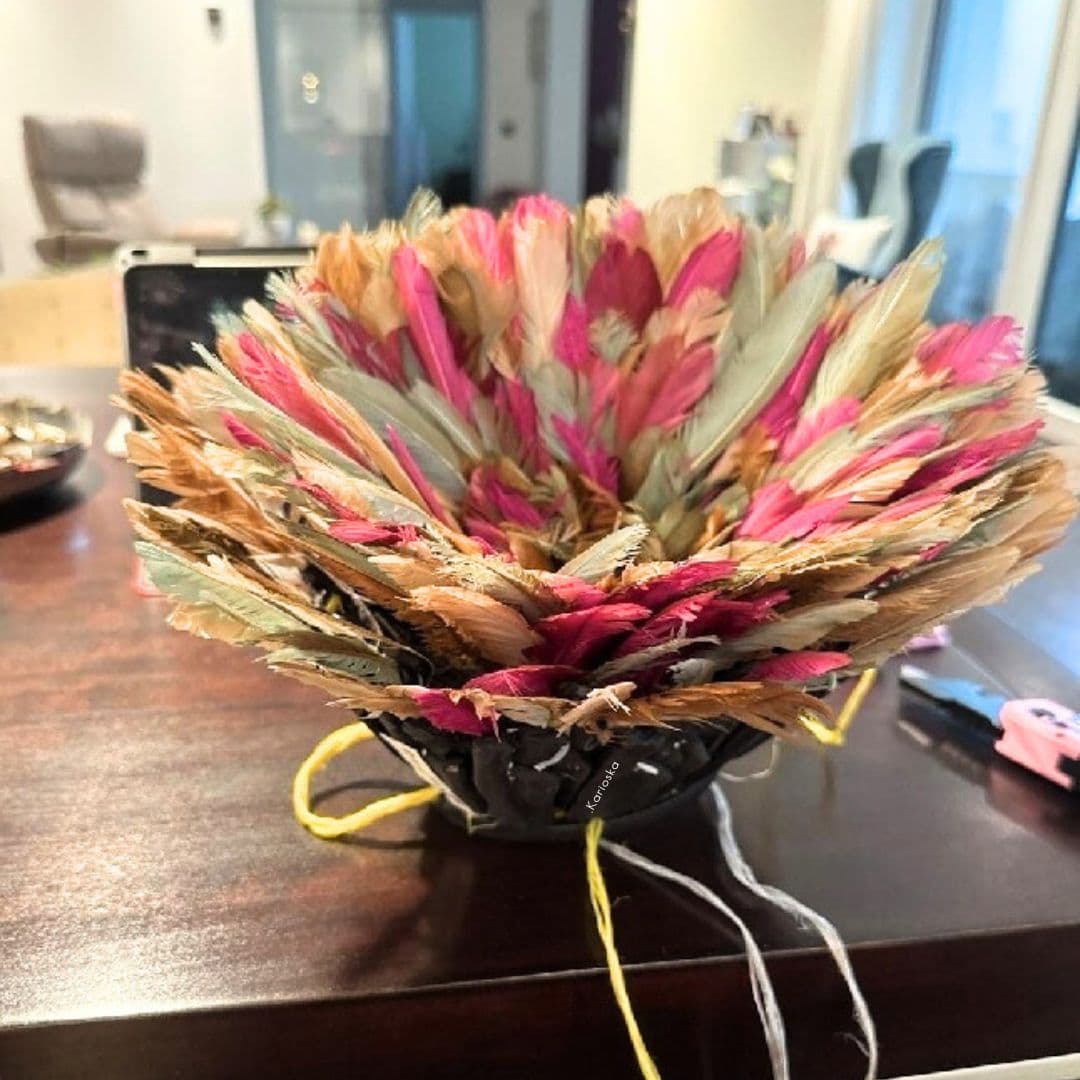
african juju hat wedding backdrop wall hanging artisanat feather ceremony juju hatt bröllop väggdekoration decorazione murale decoración mural ديكور جداري 非洲婚礼墙面装饰 日本結婚式壁飾り

All about the authentic Bamileke Juju hat

The Bamileke juju hats, is a traditional Cameroonian traditional headdress artifact that has seamlessly transitioned into contemporary interior design. Handcrafted from natural materials like feathers, rattan and raffia, these hats are now celebrated as unique wall decorations, adding cultural depth and aesthetic appeal to modern spaces. Origins of the juju hats Originating from the Bamileke people in western Cameroon, juju hats were traditionally worn by royal dancers during significant ceremonies. They symbolized prosperity, wealth, and the continuity of familial responsibilities, often passed down from one generation to the next. This practice ensured the preservation of cultural heritage and familial lineage. Symbolism and cultural significance In the Bamileke language (Bandjoun), the juju hat is referred to as “Teng” representing abundance and prosperity. Its use in traditional ceremonies underscores its role as a marker of social status and power within the community. Craftsmanship and materials Creating an authentic juju hat is a meticulous process that can take up to three days. Artisans carefully select natural feathers, attaching each one individually on raffia then to a rattan base. This intricate assembly allows the hat to unfold into a voluminous display and collapse for easy storage. The dedication and skill involved highlight the rich artisanal traditions of the Bamileke people. Transition to modern decor In recent years, the juju hat has gained popularity as a decorative wall piece. Interior designers appreciate its ability to introduce texture, color, and a sense of global heritage into various design styles, from bohemian to contemporary. Its natural materials and handcrafted quality make it a versatile addition to modern interiors. Choosing the right juju hat When selecting a juju hat for your space, consider the color and size that best complement your interior. Each hue carries its own symbolism and can influence the ambiance of a room. For instance, white symbolizes purity and openness, while vibrant colors like red or yellow can add energy and warmth. Installation and care Mounting a juju hat is straightforward, as they come equipped with attachments for easy wall hanging. To maintain their beauty, regularly dust them gently and avoid exposure to moisture to preserve the feathers’ quality. Incorporating a juju hat into your decor not only enhances aesthetic appeal but also honors the rich cultural heritage and artisanal craftsmanship of the Bamileke people. Each piece tells a story, bridging the gap between traditional African art and modern design.

The Bamileke Ndop and the Toghu fabric, two symbols of Cameroon’s living heritage

The Bamileke Ndop and the Toghu fabric, two symbols of Cameroon’s living heritage

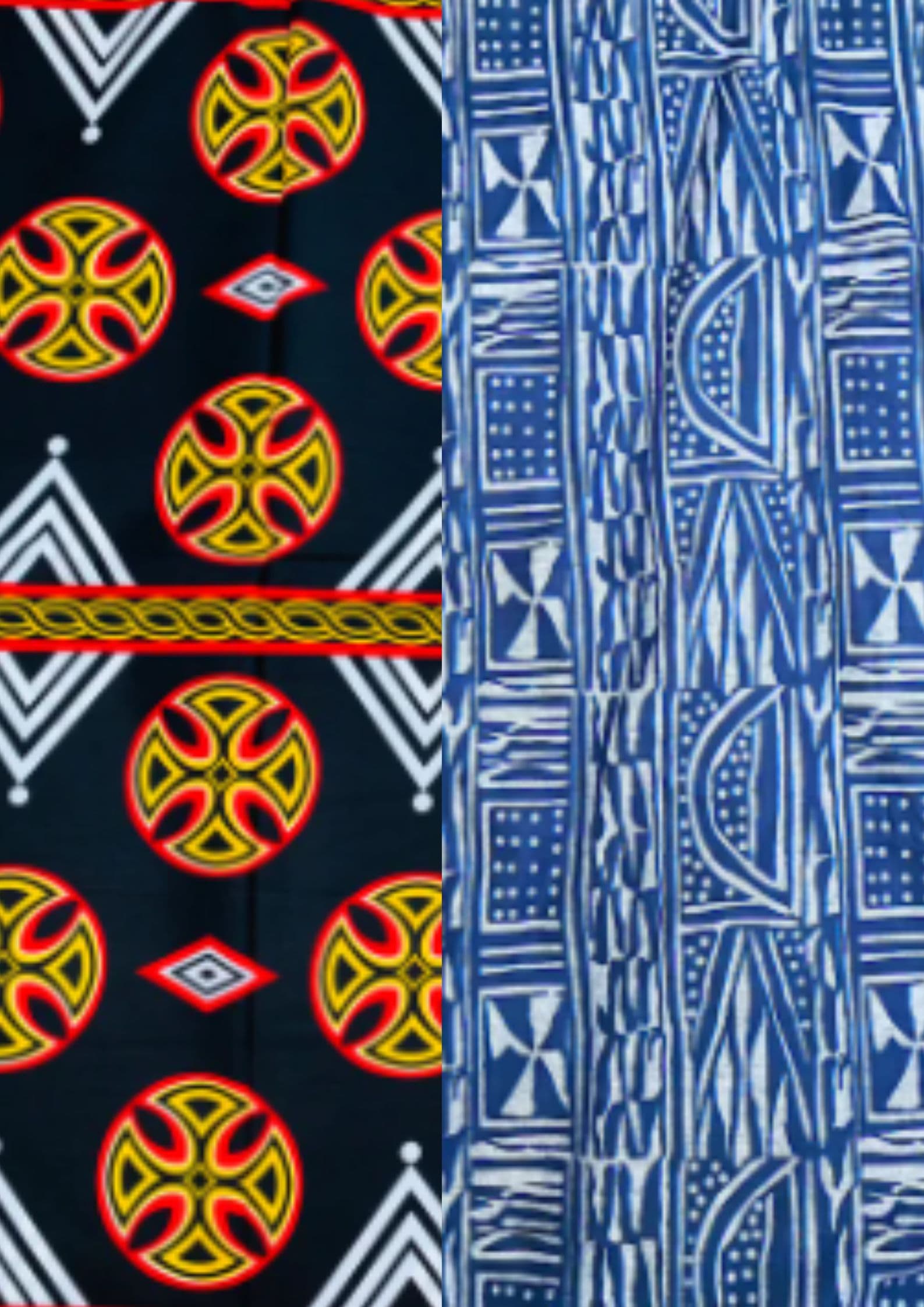
Cameroon carries a remarkable textile heritage, and two fabrics stand out with singular strength: Ndop and Toghu. Both originate from the Grassfields kingdoms, yet each tells a different story.Together, they form a cultural bridge between royalty, spirituality, and contemporary identity. The ndop fabric, geometry, indigo, and ancestral wisdom Ndop fabric holds a sacred place in Bamileke culture. Artisans weave cotton by hand, stitch raffia motifs with precision, and immerse the fabric in natural indigo baths. As the stitches come off, patterns appear with clarity and intention. The process feels almost ritualistic, because each gesture echoes generations of knowledge. Moreover, Ndop motifs never arise by chance. They reflect a symbolic system deeply rooted in memory: Thus, ndop does more than decorate a space, it transmits a worldview shaped by balance, community, and spirituality. Today, ndop naturally integrates into contemporary interiors. Its indigo depth, geometric strength, and spiritual dimension offer a quiet, soulful presence wherever it hangs or rests. The Toghu fabric, royal elegance and vibrant storytelling While Ndop speaks with indigo and geometry, Toghu expresses itself through movement and color.Born among the Bamenda Grassfields kingdoms, Toghu once dressed kings, queens, and dignitaries during ceremonies and festivals. Artisans trace the motifs by hand, then embroider them with vivid threads, creating a fabric that almost breathes through its patterns. Toghu motifs celebrate royalty, bravery, fertility, community, and ancestry. Every line follows the rhythm of the artisan’s hand; every color reinforces the narrative. Unlike mass-produced textiles, Toghu carries identity as a living energy. In addition, Toghu continues to evolve. Designers, dancers, and cultural ambassadors now reinterpret it in fashion, performance, and art installations. Thus, a fabric once reserved for elite ceremonies now becomes a global ambassador of Cameroon’s creative spirit. Two fabrics, one cultural heartbeat Although Ndop and Toghu differ in technique and appearance, they share a common soul.They both anchor communities in their origins, while offering new forms of expression to future generations. Together, they reveal the complexity and richness of Cameroon’s artistic identity. A legacy that continues through the hands that create it In the villages where these fabrics originate, artisans carry stories that predate modern borders. They spin cotton, dye indigo, embroider symbols, and share their time with a patience that defies haste. Their work reminds us that beauty arises from intention and discipline. Therefore, supporting these artisans means more than acquiring a textile. It means sustaining a lineage, strengthening communities, and allowing ancient techniques to remain alive and dignified. At Karioska, we honor this heritage by collaborating directly with artisans in Cameroon. This connection ensures authenticity, fair compensation, and cultural continuity, from the moment the fabric is created to the moment it enters your home. Ndop and Toghu, fabrics that speak They do not follow trends.They do not chase attention.Instead, they whisper the stories of a people, a land, and a time that continues to flow through the hands that shape them. Ndop offers depth. Toghu offers radiance. Both offer meaning, a quiet luxury, woven with intention.

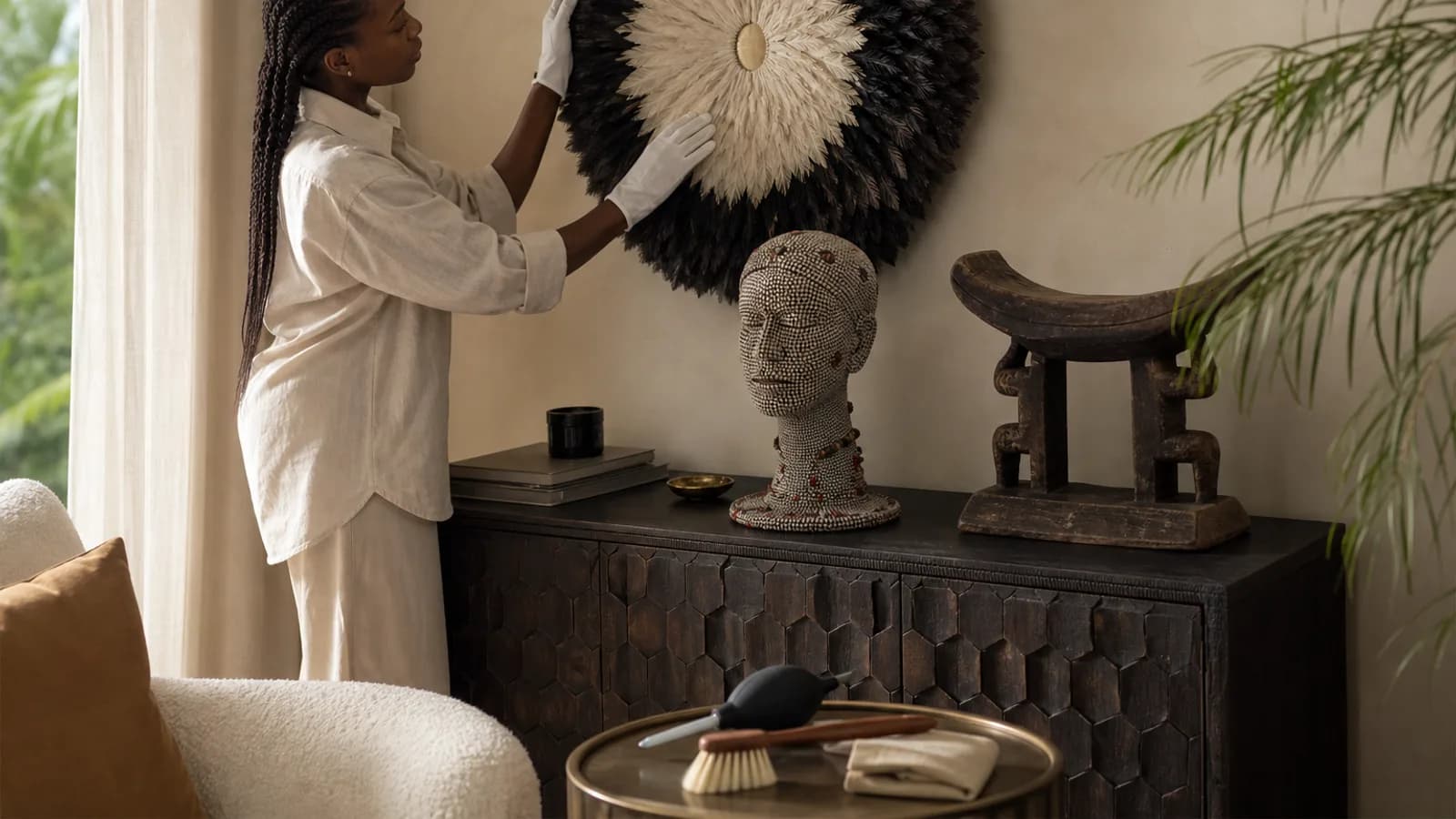
Feather, Bead and Carved Wood Care for Long-Lasting Beauty

Feather, Bead and Carved Wood Care for Long-Lasting Beauty

A practical care guide for feathered Juju Hats, beaded sculptures and carved wooden pieces. Learn how to dust safely, manage humidity and light, choose gentle tools and know when to seek professional repair.

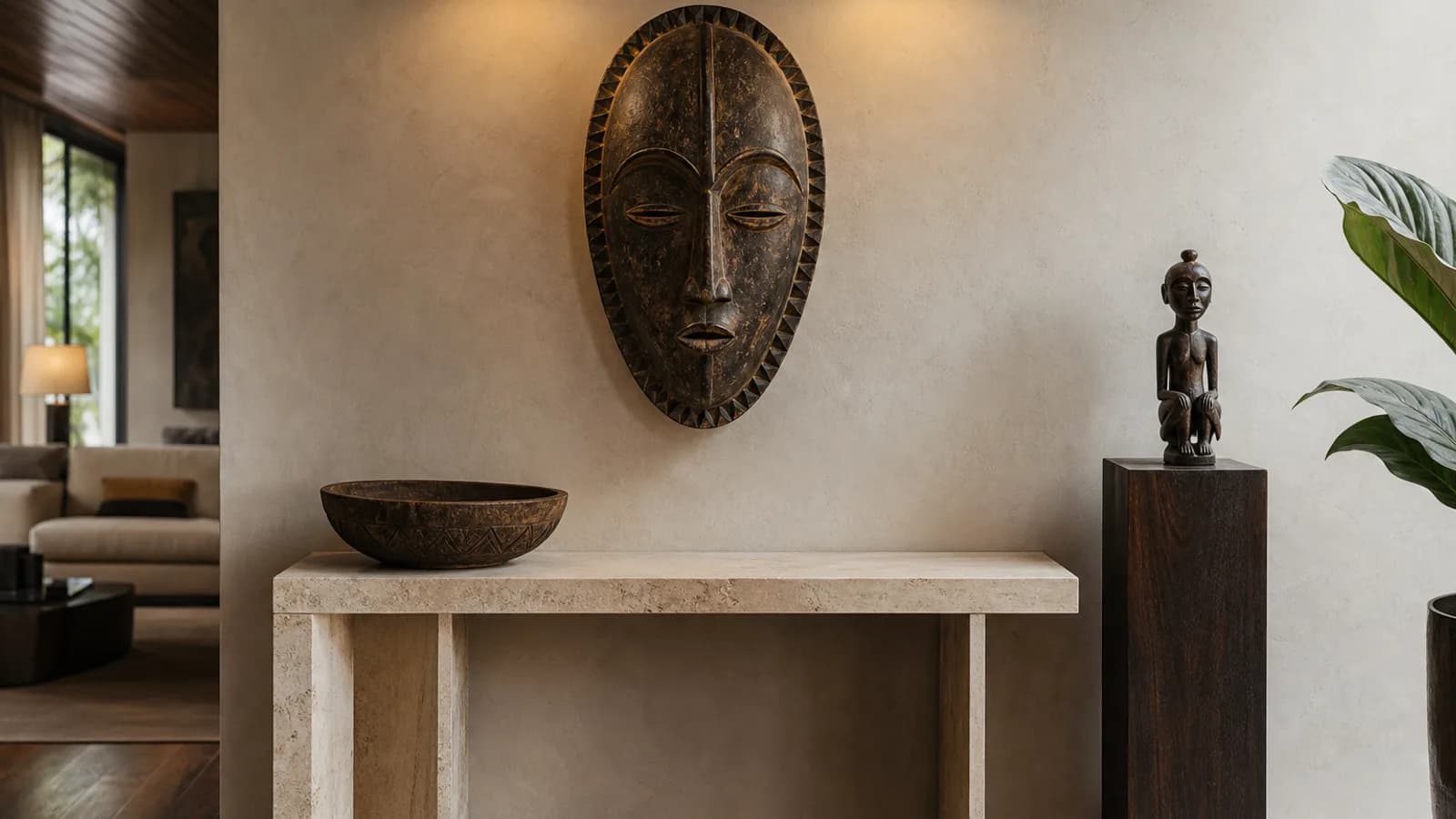
Mixing Vintage African Objects With Modern Design

Mixing Vintage African Objects With Modern Design

How to blend patinated African pieces with clean lines and contemporary materials using proportion, contrast and light. Room by room ideas for living rooms, entries and offices.